

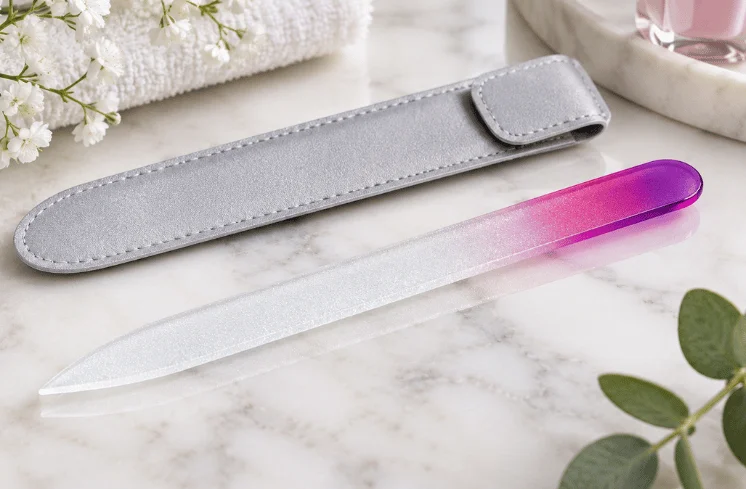
A crystal nail file can shape natural nails while leaving a smoother edge than many traditional files. Its fine abrasive surface removes small amounts of nail with controlled strokes. For people with peeling or fragile nail tips, that gentler feel can make home manicures easier.
Glass and crystal files are commonly made from hardened or tempered glass with an abrasive filing surface. The words “glass” and “crystal” are often used interchangeably in beauty retail. Construction quality matters more than the label printed on the package.
| Quick fact | What U.S. shoppers should know |
|---|---|
| Best suited for | Natural fingernails and gentle shaping |
| Material | Usually tempered or hardened glass |
| Main advantage | Fine, controlled filing with a smooth finished edge |
| Cleaning | Washable models can usually be cleaned with soap and water. |
| Storage | A protective sleeve or case helps prevent breakage. |
| Good for travel | Yes, when stored in a rigid protective case |
| Main drawback | Glass can chip or break if dropped on a hard surface. |
Direct answer: A crystal nail file is a reusable glass filing tool designed to shape and smooth natural nails. Its fine surface offers more control than many coarse disposable boards. Choose an etched, washable file with a protective case, then use light strokes instead of aggressive pressure.
What Is a Crystal Nail File?
A crystal file is a rigid nail-shaping tool made from glass rather than flexible cardboard or metal. The filing surface contains a fine abrasive texture that gradually removes material from the free nail edge. Quality versions are designed to remain consistent through repeated use.
You may also see these products sold as glass nail files. Beauty professionals often use both names for the same general product category. Some manufacturers distinguish between production methods, so buyers should check the construction details instead of relying on marketing language alone.
The best models use a permanent abrasive treatment rather than a surface coating that quickly wears away. A uniform texture should feel fine rather than aggressively rough. A protective sleeve is also valuable because glass remains breakable despite being strengthened.
Crystal Nail File Benefits for Natural Nails

The biggest advantage is control during shaping. Fine abrasion lets you shorten an edge gradually rather than removing a large amount at once. That can help when maintaining almond, oval, round, squoval, or softly squared shapes.
The smoother filing action also appeals to people whose nail tips peel or catch on fabric. Coarse filing can leave an uneven free edge when technique or pressure is poor. Dermatology literature on brittle nails recommends reducing trauma and filing gently in one direction.
Reusable glass files also create less routine waste than frequently replaced cardboard boards. Many washable models can remain useful for years when handled carefully. Their rigid shape also makes consistent filing pressure easier for some users.
Another benefit is simple cleaning. The CDC recommends cleaning nail grooming tools before use because germs can collect around nails and grooming equipment. Washable files make that routine easier to maintain at home.
Crystal, Emery, or Metal: Which Nail File Is Better?
Each type has a place, but they do not feel the same on natural nails. Your best choice depends on nail condition, desired speed, and how much control you want. The comparison below focuses on ordinary at-home natural nail care.
| File type | Filing fee | Durability | Cleaning | Best use |
|---|---|---|---|---|
| Crystal or glass | Fine and controlled | High if protected from drops | Usually washable | Regular natural-nail shaping |
| Emery board | Ranges from fine to coarse | Low to moderate | Often difficult to wash thoroughly | Inexpensive occasional filing |
| Metal file | Firm and often aggressive | High | Usually washable | Limited shaping on sturdy nails |
Crystal or Glass File
Pros: It offers controlled shaping, a fine finish, reusability, and straightforward cleaning. The rigid surface also stays flat while you work. Many users find that helpful when correcting small snags.
Cons: It can break after a hard drop. A quality version may also cost more initially than a disposable emery board. Keeping it inside a case reduces the biggest practical risk.
Emery Board
Pros: Emery boards are inexpensive, widely available, and offered in many grit levels. They work well when you need a simple disposable grooming tool. They are also lighter than most glass alternatives.
Cons: The abrasive surface gradually wears down. Some coarse boards can feel harsh on thin natural nails. Used boards are also less convenient to clean thoroughly.
Metal File
Pros: Metal files are durable and easy to store in many grooming kits. They can remove nail material quickly. Their longevity makes them convenient for occasional users.
Cons: The aggressive feel can make over-filing easier. People with thin or peeling nails may prefer a finer surface. Careful pressure matters regardless of the file material.
Verdict: For routine natural fingernail care, a well-made crystal or glass file is the strongest all-around choice. It combines precise shaping, washability, and long service life. Coarse tools remain useful when faster material removal is necessary.
How to Use a Crystal Nail File Correctly
Start with clean, dry hands and inspect the free edge of each nail. Decide how much length you want to remove before filing. Large reductions are usually easier with clippers before fine shaping.
Hold the file comfortably and place it against the nail edge at a slight angle. Use light pressure while moving from the outer edge toward the center. Repeat on the opposite side until the shape looks balanced.
The American Academy of Dermatology recommends smoothing rough edges in the same direction. Back-and-forth sawing can weaken nails, especially when the edge is already fragile. This conservative technique also gives you better control over the final shape.
Finish by checking every tip for rough spots. Avoid filing the top surface of a healthy nail merely to make it thinner. Research on nail health notes that surface filing can thin the plate and encourage splitting.
Seven Reasons People Switch to Glass Files
- Fine abrasion gives more control during routine shaping.
- A smooth filing surface can help create a cleaner finished edge.
- Washable designs support better tool hygiene.
- Quality files can outlast many disposable boards.
- Their rigid body helps maintain a consistent angle.
- Protective cases make compact versions suitable for travel.
- They work with several popular natural nail shapes.
These advantages do not mean every glass file performs equally well. Surface quality, manufacturing method, thickness, and case design can change the experience. Choosing construction over packaging claims is the safer buying strategy.
What to Look for Before Buying
Start by checking whether the abrasive surface is permanent or merely coated. An etched filing surface generally offers better long-term value because the texture is built into the glass. Product descriptions should clearly explain the material and construction.
Next, inspect the shape and size. A compact file works well for handbags and travel kits, while longer models provide more gripping space. Rounded ends can also feel safer inside crowded cosmetic bags.
A protective case should be considered part of the purchase rather than an optional extra. Tempered glass is stronger than ordinary glass, but it can still break. A rigid case provides better protection than tossing the file loose into a drawer.
U.S. shoppers should also compare return policies, replacement terms, and customer reviews. Look for comments about grit consistency rather than appearance alone. Avoid treating the word “crystal” as proof of higher quality.
Readers interested in more appearance and personal-style content can browse Konthly’s Fashion section. Konthly also covers broader personal-expression topics, including its feature on tattoo art and care. More current guides appear through the Konthly homepage.
How to Clean and Store Your File
Clean the tool regularly according to the manufacturer’s instructions. For ordinary personal use, many glass models can be washed with soap and water. Dry the surface completely before returning it to its case.
The CDC recommends cleaning grooming tools before use. Shared salon equipment requires stricter infection-control practices than personal tools at home. Never share a personal nail file without appropriate cleaning and disinfection.
Store the file away from hard objects that can strike its edges. A sleeve protects against scratches, while a rigid case offers better impact protection. Replace the file if you notice chips, cracks, or sharp damaged areas.
Mistakes That Can Damage Your Nails
Using excessive pressure is one common mistake. Filing should remove small amounts gradually rather than grind the nail quickly. Stop if the nail becomes uncomfortable or sensitive.
Another mistake is repeatedly thinning the nail’s upper surface. That technique is different from shaping the free edge. Medical literature links repeated nail trauma with brittleness and splitting.
Frequent water exposure can also contribute to splitting. Mayo Clinic advises keeping nails dry and clean while moisturizing nails and cuticles. Gloves can help during dishwashing, cleaning, or prolonged wet work.
Is a Crystal Nail File Worth It?
For most people maintaining natural nails at home, the answer is yes. The initial cost can be higher than a disposable board, but a protected file can last much longer. Washability and controlled shaping add practical value beyond appearance.
It is especially appealing for people who dislike rough, flexible emery boards. Those with fragile nails should still use light pressure and conservative technique. A file cannot correct brittleness caused by medical conditions or repeated chemical exposure.
Persistent color changes, pain, swelling, unusual thickening, or nail separation deserve professional attention. Mayo Clinic recommends medical evaluation for several lasting changes in nail color, shape, thickness, or surrounding skin. A grooming tool should never substitute for diagnosis.
Frequently Asked Questions
Is a crystal nail file the same as a glass nail file?
In everyday beauty retail, the terms commonly describe the same general category. Both usually refer to a hardened glass tool with an abrasive surface. Construction quality matters more than which word appears on the package.
Can you use a crystal nail file on natural nails?
Yes, these files are commonly designed for natural fingernails. Light pressure gives you better control and reduces unnecessary trauma. File the free edge rather than aggressively thinning the nail surface.
Can you file back and forth with a glass file?
Some manufacturers say their products allow filing in either direction. Dermatology guidance still favors one-direction filing for fragile natural nails. Following the more conservative technique is sensible when peeling or splitting is a concern.
How often should you clean a glass nail file?
Clean it whenever visible nail dust or debris collects on the surface. Regular cleaning is also sensible before grooming sessions. Follow the maker’s care instructions because coatings and decorative finishes can differ.
How long does a glass nail file last?
A quality etched file may remain usable for years when the surface stays intact. Breakage is usually a bigger concern than ordinary abrasive wear. Store it inside a protective case between uses.
Is a crystal nail file good for brittle nails?
Its fine surface can provide controlled shaping for fragile nail edges. Technique still matters because excessive filing can worsen brittleness. Persistent splitting may have causes that require medical evaluation.
The Bottom Line
A good glass file is a practical upgrade for people who regularly shape natural nails. Look for a fine permanent abrasive surface, washable construction, and a protective case. Use light one-direction strokes, clean the tool regularly, and avoid thinning the nail plate.
The crystal nail file is not a treatment for unhealthy nails, but it can make routine grooming more controlled. Pair careful filing with clean tools, moisturizer, and protection from repeated wet work. Those habits support smoother nail edges without adding unnecessary trauma.