

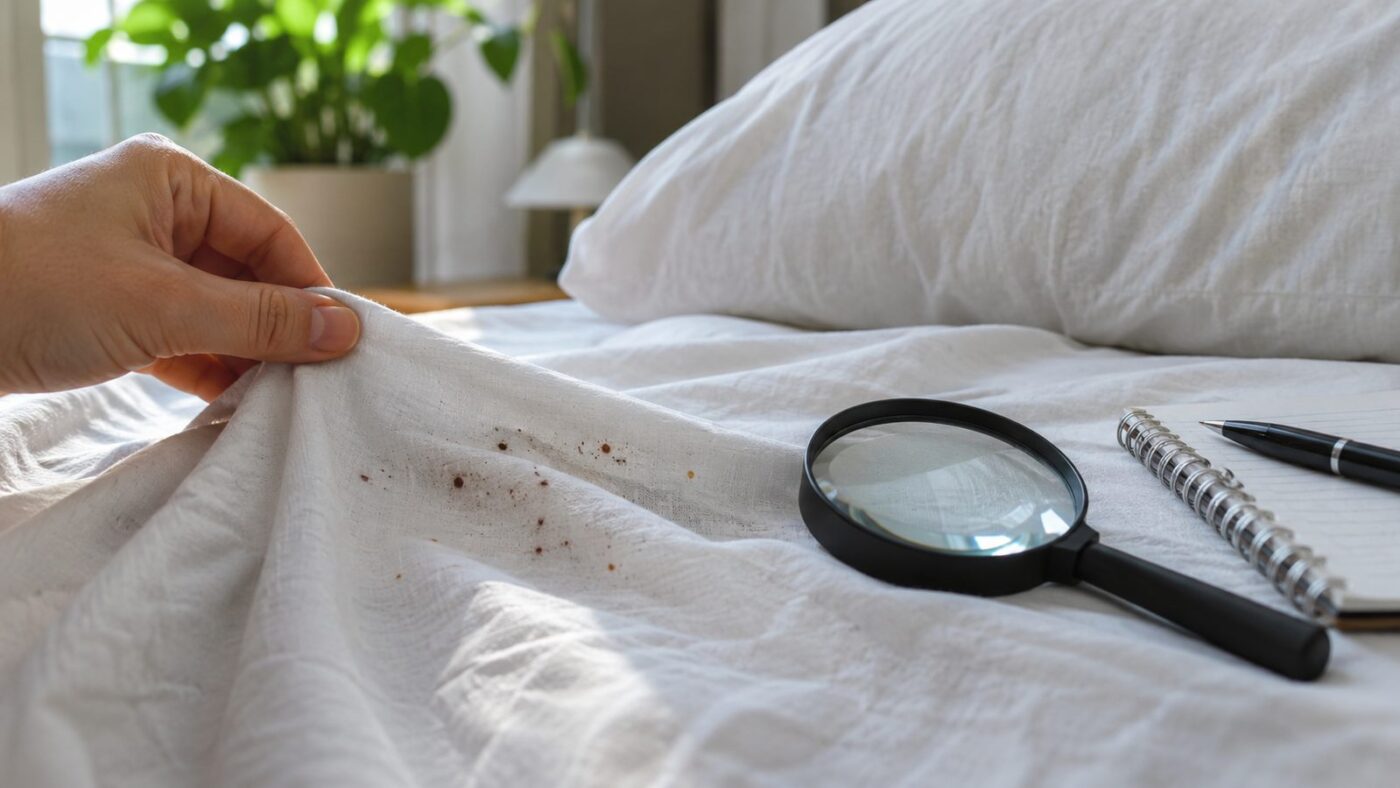
Finding unexplained marks on your bedding can make any stain look suspicious. Bed bug bed sheet stains usually appear reddish, rusty, brown, or dark brown to black. The stain alone cannot confirm an infestation, so you should inspect the surrounding bed carefully. U.S. Environmental Protection Agency guidance identifies two especially useful clues on bedding. Reddish marks can come from crushed insects, while dark spots may be insect waste. Eggs, shed skins, and live insects provide stronger supporting evidence. Quick answer: Bed bug stains may appear as small rusty-red smears, blood spots, or dark ink-like dots. Check mattress seams, bedding folds, the box spring, headboard, and bed frame for additional evidence. One unexplained stain does not prove bed bugs are present, so look for several consistent signs before deciding what caused it.
Bed Bug Bed Sheet Stains at a Glance
| Sign | Typical appearance | Where you may notice it | What it may indicate |
|---|---|---|---|
| Blood mark | Red, rusty, or reddish-brown | Sheets, pillowcases, mattress | A recently fed insect may have been crushed |
| Fecal spot | Dark brown or black dot | Seams, folds, mattress edges | Digested blood waste |
| Smear | Rust-colored or dark streak | Bedding or mattress fabric | A crushed insect or disturbed fecal mark |
| Shed skin | Pale tan or translucent shell | Seams, frame joints, box spring | Growing insects nearby |
| Egg | Tiny, pale, whitish object | Protected cracks and seams | Possible breeding activity |
The color and location provide useful clues, but neither provides absolute proof. Bed bugs hide well and leave several types of evidence around sleeping areas. A careful inspection gives you far more information than the sheet stain alone.
Key Takeaways
* Rusty or reddish marks may come from a blood-fed insect being crushed. * Dark brown or black dots can be fecal spotting. * Mattress seams and frame joints deserve close inspection. * Shed skins, eggs, or live insects strengthen the evidence. * Bites alone cannot reliably identify the pest. * Cleaning the sheet does not remove an active infestation. * Professional identification can help when the evidence remains unclear.
What Do Bed Bug Stains Look Like on Sheets?
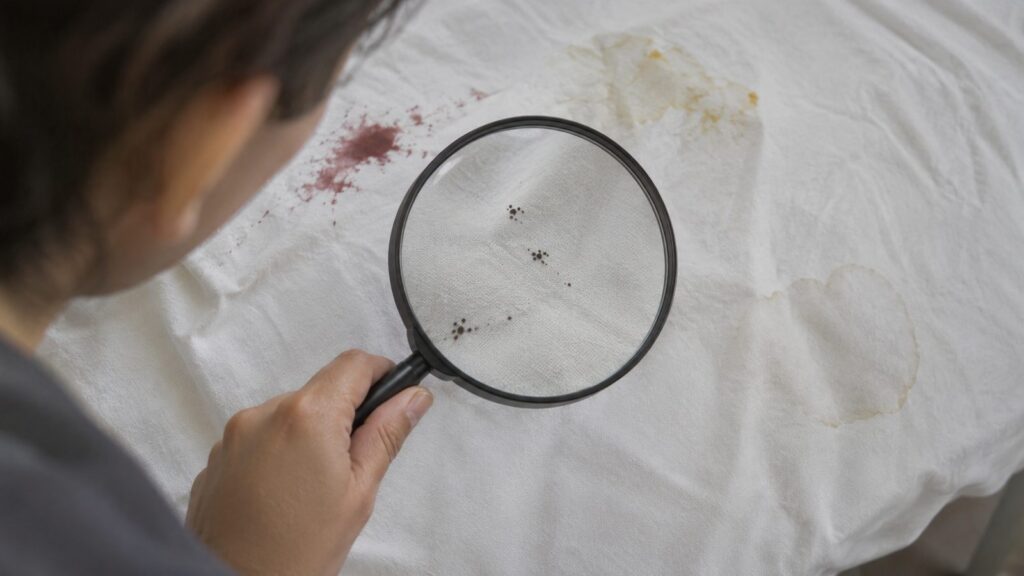
The most noticeable marks are often rusty-red spots or small smears. They can appear after a recently fed insect gets crushed during sleep. Similar stains can have other causes, so appearance should guide inspection rather than prove infestation. Dark marks are another common clue around an infested sleeping area. These spots can resemble tiny marker dots on fabric or dark specks near seams. EPA guidance says this waste can bleed into fabric much like marker ink. You may find several types of marks in the same area. For example, a sheet could show one red smear and nearby darker spotting. That combination deserves a closer check of the mattress, frame, and headboard.
Five Signs Worth Checking Around the Bed
1. Rusty or Reddish Blood Marks
Small red or rust-colored marks can develop when a fed insect gets crushed. You may notice them near areas where your body rested overnight. They may look more like irregular spots than neat droplets. A blood spot does not automatically mean you have an infestation. Minor skin irritation, scratches, or other household causes can also stain bedding. Look for dark spotting or physical insect evidence before drawing a conclusion.
2. Tiny Dark Brown or Black Dots
Dark dots can be more useful than an isolated blood spot. Bed bug waste often looks like dark ink marks on fabric. Health agencies also describe these marks as black spots near feeding or hiding areas. Check whether multiple marks gather near mattress seams or protected edges. Repeated spotting in those locations deserves careful inspection. Random black debris elsewhere may have an unrelated source.
3. Pale Shed Skins
Young bed bugs shed their outer skins as they develop. These empty shells can appear pale, tan, yellowish, or translucent. They often collect near protected hiding places rather than across open sheets. Inspect seams, box-spring edges, frame joints, and headboard cracks for these shells. Their presence beside suspicious stains strengthens the case for an infestation. Save a specimen for identification when possible.
4. Eggs or Eggshells
Eggs provide another physical sign worth checking. EPA guidance describes them as tiny and roughly one millimeter in size. Their small size makes a flashlight helpful during inspection. Look inside narrow cracks rather than only across the sheet surface. The insects prefer protected locations near their hosts. Eggs beside fecal spotting are more significant than an isolated mystery speck.
5. Live Bugs Near Seams or Frames
A live specimen gives much stronger evidence than a stain. Adults are visible without specialized equipment, although they hide effectively during daylight. Mattress piping, box springs, frames, and headboards are common inspection areas. Do not depend on bites to identify them. Skin reactions vary among people and can resemble other bites or rashes. Physical evidence around the bed usually provides a better identification path.
Where Should You Inspect After Finding a Stain?
Start with the area nearest the suspicious mark. Pull back the bedding and slowly inspect mattress seams, piping, labels, and corners. EPA guidance specifically identifies these protected mattress and box-spring areas as common hiding locations. Next, inspect the headboard and bed frame. Check joints, screw holes, narrow gaps, and places where different materials meet. The insects can fit inside remarkably narrow spaces close to the sleeping area. Continue outward only after checking the bed thoroughly. Nearby furniture, baseboards, cushions, and curtain folds can become hiding sites during larger infestations. Avoid moving unbagged bedding through other rooms during your inspection. For more household pest information, Konthly readers can also review the home pest guide about rat problems. Different pests require different controls, but early identification matters in both cases. Konthly’s broader home improvement section also covers practical household maintenance topics.
Can You Tell Bed Bugs Apart From Other Sheet Stains?
Location provides one useful clue. Pest-related spotting often appears near sleeping areas, seams, folds, or protected mattress edges. An isolated mark in an unrelated location offers much weaker evidence. Pattern also matters when you compare possible causes. Several dark dots near a mattress seam deserve more attention than one rusty stain. Combining stains with shells, eggs, or insects creates a much stronger identification picture. Do not identify an infestation from color alone. Makeup, rust, food, wounds, fleas, and other sources can create similar marks. Treat the stain as the beginning of an inspection rather than the final diagnosis.
What Should You Do When You Find Suspicious Stains?
First, document what you found before washing everything. Take clear photos and note exactly where each mark appeared. This record can help a pest professional evaluate the evidence later. Next, inspect the mattress, box spring, frame, and headboard carefully. Place potentially affected washable items into sealed bags before moving them. This reduces the chance of carrying hidden insects elsewhere. Cleaning should support pest control rather than replace it. A clean sheet can remove visible marks while the underlying insects remain nearby. If you confirm several physical signs, consider contacting a qualified pest management professional. Konthly’s article about professional home maintenance services discusses why trained help can matter for specialized household problems. Pest treatment is different work, so choose a provider with bed bug experience. Ask how the company confirms an infestation before treatment begins.
How Should Bedding Be Handled?
Avoid carrying loose bedding through your home after finding suspicious evidence. Bagging linens before movement can reduce opportunities for insects to spread. Minnesota health guidance recommends keeping potentially affected linens contained and separated. Follow fabric-care labels when laundering bedding. Treatment recommendations can vary by material and the confirmed pest situation. A pest professional can also explain how laundry fits into a larger control plan. Do not discard a mattress solely because you found one stain. Replacing furniture without addressing the infestation can waste money. It may also spread pests when untreated items are moved through the home.
When Should You Call a Pest Professional?
Professional help makes sense when you find live insects, repeated fecal spotting, eggs, or shed skins. It can also help when suspicious evidence continues appearing after repeated inspections. Accurate identification prevents you from treating the wrong pest. Bed bugs can hide inside small spaces that are difficult to inspect. A trained professional can examine the whole sleeping area and nearby furniture. They can then recommend controls based on confirmed evidence rather than guesswork. If you rent your home, review your lease and applicable local rules before treatment. Reporting requirements and responsibilities can differ between locations. Documenting the evidence can help when speaking with a landlord or property manager.
Frequently Asked Questions
Are bed bug bed sheet stains always red?
No, bed bug bed sheet stains can appear red, rusty, brown, dark brown, or black. The color can depend on whether you see blood or fecal material. Use the mark’s location and nearby physical evidence to judge its significance.
Do black dots on sheets mean I have bed bugs?
Black dots can be suspicious, especially near mattress seams or protected edges. Yet dirt, ink, mildew, and other materials can create dark marks too. Check for eggs, shells, live insects, and repeated spotting before reaching a conclusion.
Can bed bugs leave stains without you seeing the insects?
Yes, people may notice physical traces before seeing a live insect. These pests spend much of their time hidden inside seams and narrow gaps. That makes careful inspection important after unexplained stains appear.
Do bed bug stains wash out?
Some visible marks may become lighter or disappear during normal fabric cleaning. Removing a stain does not remove insects hiding elsewhere around the bed. Deal with the possible infestation separately from the cosmetic mark.
Are bites enough to confirm bed bugs?
No, bites alone cannot reliably identify the source. Skin reactions differ greatly, and other pests or conditions can cause similar marks. Physical evidence such as insects, eggs, shells, or characteristic spotting provides better confirmation.
The Bottom Line
Unexplained sheet marks deserve inspection, but they do not deserve panic. Check the stain’s color, pattern, and location, then inspect the mattress and bed structure. Several matching signs provide stronger evidence than one suspicious spot. Focus first on physical clues you can verify. Photograph what you find, contain potentially affected bedding, and avoid spreading items between rooms. Seek professional identification when you find repeated signs or remain uncertain. Early attention can make the next decision much clearer. You will know whether ordinary cleaning is enough or pest control deserves priority. A methodical inspection is the safest place to start. —