

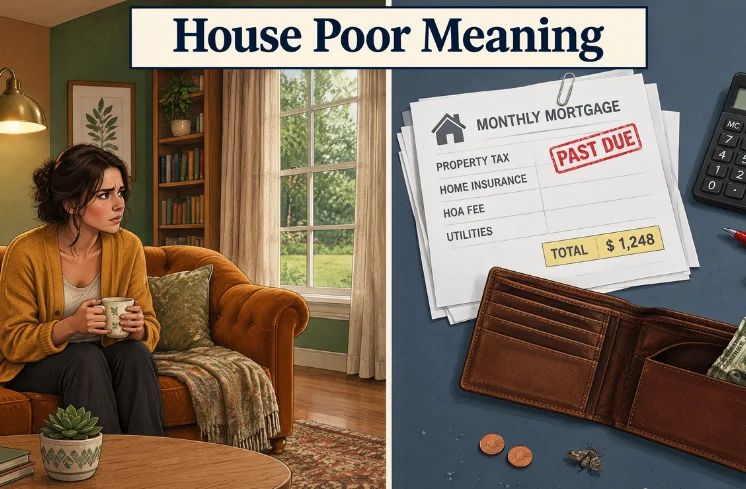
The house poor meaning is simple: your home consumes so much income that other financial priorities become difficult. You may afford the mortgage while struggling with savings, debt, groceries, repairs, or unexpected bills. This problem can affect households at many income levels.
Housing costs have become a larger concern for many American homeowners. U.S. Census Bureau data shows that median monthly owner costs increased in 2024. Mortgage payments, insurance, taxes, utilities, and other fees can all affect affordability.
Quick answer: Being house poor means spending so much on housing that little money remains for everyday needs, savings, emergencies, or other goals. A common U.S. benchmark considers households spending more than 30% of income on housing costs to be cost-burdened. Your personal limit may need to be lower.
| Key point | What it means |
|---|---|
| Common benchmark | More than 30% of income spent on housing may indicate cost burden |
| Costs to include | Mortgage, taxes, insurance, utilities, HOA fees, and maintenance |
| Main warning sign | Housing payments leave too little for savings and normal expenses |
| Severe cost burden | More than 50% of income goes toward housing costs |
| Best prevention | Budget using total ownership costs, not the mortgage payment alone |
| Possible solutions | Cut housing costs, reduce other expenses, increase income, or consider moving |
House Poor Meaning in Everyday Financial Life
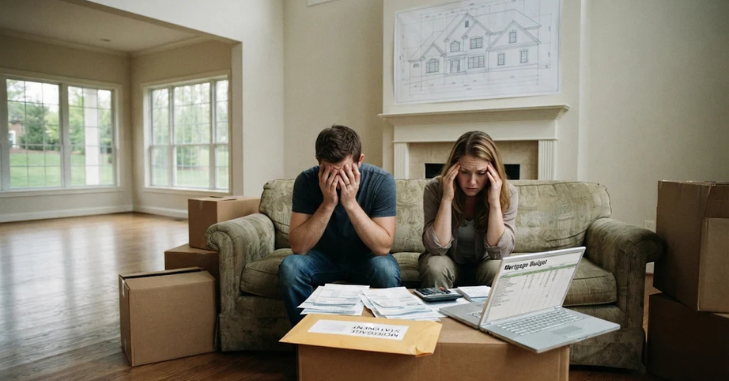
The House Poor Meaning phrase describes financial pressure caused by spending too much on a home. It does not necessarily mean someone has a low income. A high earner can face the same problem after buying an expensive property.
The U.S. Census Bureau considers households cost-burdened when they spend more than 30% of their income on rent, mortgage, and other housing needs. Households above that level are generally described as housing cost-burdened. Spending more than half of income on housing is considered a severe burden.
Still, 30% should not be treated as a perfect personal spending limit. Two families with identical incomes can have completely different expenses. Childcare, medical bills, student loans, transportation, and debt can change what feels affordable.
What Costs Can Make a Home Too Expensive?
Your mortgage payment is only one part of homeownership. Property taxes and homeowners insurance may increase after you purchase the property. Utilities and maintenance can also create substantial monthly or annual costs.
Homeowners should also plan for repairs that do not arrive on a predictable schedule. An aging roof, plumbing failure, appliance replacement, or HVAC problem can quickly change a comfortable budget. Cosmetic projects can also become expensive without advance planning.
Konthly’s guide to cabinet molding and installation costs shows how even smaller improvement projects involve material and labor expenses. Its white paint guide also illustrates how household projects require supplies and preparation. These costs matter because ownership continues long after closing day.
7 Signs Your Housing Costs Are Stretching Your Budget
No single percentage proves that your finances are unhealthy. Your cash flow provides a better picture of how housing affects daily life. Several warning signs together deserve closer attention.
| Warning sign | Why it matters |
|---|---|
| You cannot build emergency savings | One repair or income interruption may create debt |
| Credit-card balances keep growing | Normal expenses may exceed available cash |
| Retirement contributions stop | Housing is crowding out long-term priorities |
| Repairs are repeatedly delayed | The property may become more expensive to maintain later |
| Small bills create stress | Your monthly financial margin may be too narrow |
| You depend on bonuses or overtime | Normal income may not support normal housing costs |
| You cannot afford other goals | Too much money may be tied to the property |
A household can show these signs while making every mortgage payment on time. That distinction matters because payment history does not measure financial comfort. You can technically afford a payment while having little flexibility elsewhere.
How Much Income Should Go Toward Housing?
The 30% benchmark offers a useful starting point for evaluating housing costs. The Census Bureau counts mortgage payments, taxes, insurance, utilities, and several other expenses when measuring homeowner housing costs. That approach gives a broader picture than examining principal and interest alone.
Recent Census data illustrates why the full calculation matters. Median monthly costs for homeowners with mortgages reached $2,035 in 2024. The national median share of income spent by mortgage holders was 21.4%.
Your safe percentage could be much lower than 30%. A household with large debt payments may need more room outside housing. Someone with stable income and limited obligations may have greater flexibility.
A Simple Example of Becoming Housing-Cost Burdened
Consider a household earning $8,000 in gross monthly income. Suppose total housing expenses reach $2,800 each month. That equals 35% of gross income before other obligations appear.
The family may still qualify for the mortgage and make every payment. Yet childcare, car payments, groceries, healthcare, and savings can consume most remaining income. An unexpected $3,000 repair could then require a credit card.
This example shows why loan approval should not define your personal budget. A lender measures whether you meet underwriting standards. Your household must decide whether the resulting lifestyle remains comfortable.
Why People Become House Poor
Many buyers focus heavily on the purchase price and mortgage payment. They may underestimate taxes, insurance, maintenance, moving expenses, or future repairs. Rising expenses can also strain a budget that originally seemed reasonable.
Changes after purchase can create problems too. A household may lose income, face medical expenses, or start paying for childcare. Insurance premiums or property taxes can also rise over time.
Some buyers use nearly all available cash for the down payment and closing costs. That leaves little protection against repairs immediately after moving. A larger emergency reserve can provide valuable breathing room.
How to Avoid Becoming House Poor Before Buying
Start with the monthly payment you can comfortably support, not the maximum loan available. Include taxes, insurance, HOA charges, utilities, and realistic maintenance costs. Then compare that total with your other financial obligations.
Test the budget before making an offer. Set aside the expected housing amount for several months while paying current expenses. This exercise can reveal whether the proposed payment leaves enough room.
Keep cash available after closing whenever possible. Furniture, repairs, moving costs, and maintenance often begin quickly. Konthly’s cat window perch guide is one example of household purchases that seem small but still compete for discretionary spending.
What to Do If You Already Feel House Poor
Improving the situation usually requires creating more monthly financial space. Start by calculating the full cost of keeping your property. Separate required expenses from optional upgrades and discretionary spending.
- Review every housing expense. Check your mortgage, taxes, insurance, utilities, HOA fees, and maintenance spending.
- Shop recurring services. Compare insurance, internet, maintenance contracts, and other costs where changing providers is practical.
- Delay optional renovations. Protect cash reserves before spending on cosmetic projects or nonessential upgrades.
- Reduce expensive debt. Lower credit-card interest costs where your budget and repayment strategy allow.
- Increase household income. Additional reliable income can improve cash flow without changing your home.
- Build emergency savings gradually. Even smaller automatic deposits can create protection against future repairs.
- Consider a housing change if necessary. Selling or downsizing may be appropriate when the numbers remain unsustainable.
Major decisions deserve careful calculation before action. Selling involves transaction expenses, moving costs, and another housing decision. Compare the long-term numbers rather than reacting only to one difficult month.
House Poor vs. House Rich, Cash Poor
These phrases overlap but do not always describe the same situation. Someone can own substantial home equity while having limited liquid cash. Another homeowner may have little equity and an unaffordable monthly payment.
Equity cannot always pay a grocery bill or emergency expense immediately. Accessing it may require selling, refinancing, or borrowing against the property. Each option can involve costs and financial consequences.
Cash flow therefore deserves attention alongside net worth. A valuable property can strengthen your balance sheet while creating monthly pressure. Healthy finances usually require both assets and enough accessible cash.
Is Being House Poor Always a Financial Emergency?
Not necessarily. A temporary period of high housing spending may be manageable for some households. The important questions involve duration, savings, debt, and your ability to handle surprises.
Problems become more serious when credit balances rise, or emergency savings disappear. Falling behind on essential bills is another strong warning sign. At that point, preserving cash flow should become a higher priority.
You should also reconsider the budget when homeownership blocks every other financial goal. Retirement savings, emergency funds, and essential healthcare still matter. A home should support your life rather than consume the entire plan.
Protect Your Budget Before Your Home Controls It
Understanding the house’s true meaning can help you judge affordability beyond a lender’s approval amount. The key question is how much financial flexibility remains after every housing expense. Savings, debt payments, emergencies, and normal life still need room.
Calculate ownership costs before buying and review them regularly afterward. Keep an emergency reserve and avoid treating optional renovations as required expenses. These habits can reduce the risk of becoming financially trapped by your home.
A sustainable home budget should let you enjoy the property without sacrificing every other priority. If the numbers no longer work, address the gap before debt compounds. Earlier adjustments usually provide more choices than waiting for a financial crisis
Frequently Asked Questions
What is the house poor meaning in simple terms?
The house poor meaning describes spending so much on your home that little income remains for other needs. You might still pay the mortgage successfully each month. The problem is the lack of financial room after housing expenses.
Does spending more than 30% automatically mean I am house poor?
No, because personal finances vary considerably between households. The 30% level is a widely used housing-cost burden benchmark, not a universal personal rule. Your debt, family size, savings, and other expenses also matter.
What expenses should I include when calculating housing costs?
Include your mortgage, property taxes, homeowners insurance, utilities, and required association fees. You should also budget for routine maintenance and expected repairs. Looking only at principal and interest can underestimate the real cost.
Can renters be house poor too?
People sometimes use the phrase informally for renters facing overwhelming housing expenses. Government data normally describes this situation as housing cost burden. The Census Bureau reported substantial cost burdens among U.S. renter households as well.
Can a high-income household become house poor?
Yes, because the problem concerns expenses relative to available resources. A high salary can still support an oversized mortgage and expensive lifestyle commitments. High fixed costs can leave surprisingly little disposable income.
Should I sell my home if housing costs are too high?
Selling is one possible solution, but it is not automatically the first choice. Review your complete budget and possible cost reductions before deciding. Consider professional financial or housing guidance when the situation threatens essential payments.