

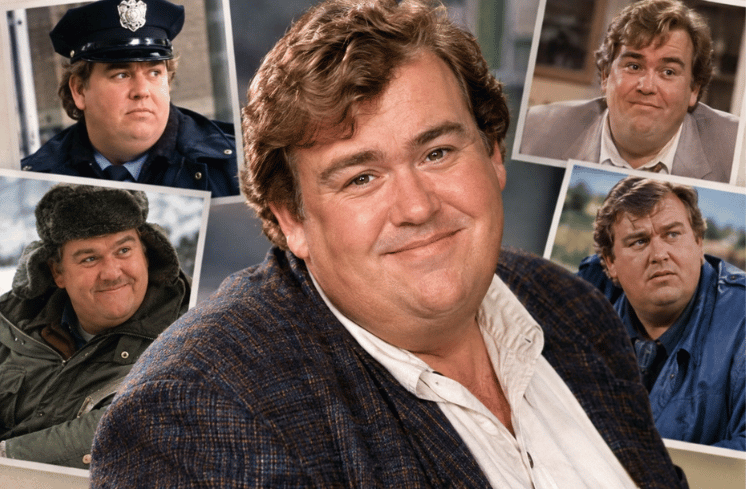
If you’re searching for john candy movies, the easiest starting point is his run of 1980s and early-1990s comedies. Planes, Trains and Automobiles, Uncle Buck, Spaceballs, and Cool Runnings show his range especially well. His filmography also includes memorable supporting appearances, voice roles, and several family-friendly favorites.
Candy became famous for characters who could be loud, awkward, irritating, and deeply sympathetic within the same scene. That quality separated his performances from many broad comedy roles of the period. His career grew from SCTV into more than 40 feature films before his death in 1994.
Quick answer: Start with Planes, Trains and Automobiles, Uncle Buck, Spaceballs, Cool Runnings, and Splash. These films cover Candy’s road comedy, family comedy, parody, sports comedy, and supporting-character work. From there, explore The Great Outdoors, Stripes, Summer Rental, and his shorter appearances in major Hollywood hits.
John Candy at a Glance
| Detail | Information |
|---|---|
| Full name | John Franklin Candy |
| Born | October 31, 1950 |
| Birthplace | Newmarket, Ontario, Canada |
| Died | March 4, 1994 |
| Profession | Actor, comedian, writer |
| Breakthrough platform | SCTV |
| Major film period | 1980s to early 1990s |
| Signature genres | Comedy, family films, parody, road movies |
| Good first watch | Planes, Trains and Automobiles |
| Family-friendly starting point | Cool Runnings |
Candy first gained wider recognition through Second City and SCTV before becoming a familiar Hollywood presence. His film career mixed starring vehicles with scene-stealing supporting parts. That combination produced a catalog with more variety than his comedy-star image sometimes suggests. Readers who enjoy actor profiles can find more in Konthly’s Entertainment section.
Key Takeaways
* Planes, Trains and Automobiles gives Candy one of his most emotionally complete roles. * Uncle Buck places his warm but chaotic screen personality at the center. * Spaceballs shows how well he fitted into broad parody. * Cool Runnings introduced his work to another generation of family audiences. * Splash helped establish him as a major Hollywood comedy performer. * His smaller appearances in Home Alone and National Lampoon’s Vacation remain memorable. * The 2025 documentary John Candy: I Like Me renewed attention around his career.
Which John Candy Movies Should You Watch First?
No single film represents every side of Candy’s screen work. His strongest starting points depend on whether you want heart, parody, family comedy, or ensemble humor. The selections below give a broad tour without requiring you to watch his entire filmography.
1. Planes, Trains and Automobiles (1987)
Candy plays Del Griffith opposite Steve Martin’s tightly wound Neal Page. Their Thanksgiving journey turns missed connections and travel disasters into a character-driven road comedy. The film also gives Del emotional depth that gradually changes how viewers understand him.
This is a useful first choice because Candy gets room for both physical comedy and quieter moments. Del can frustrate Neal without becoming a simple comic obstacle. That balance explains why the performance remains closely associated with Candy’s career.
2. Uncle Buck (1989)
Uncle Buck puts Candy in the title role as an unreliable relative suddenly responsible for three children. Buck initially seems ill-suited for family responsibility. The comedy develops as his loyalty becomes clearer and his relationship with the children changes.
The movie works especially well for viewers who like comedy built around family tension. Candy gets to be messy, intimidating, affectionate, and protective. Those contrasting qualities make Buck more memorable than a standard irresponsible-uncle character.
3. Spaceballs (1987)
Mel Brooks cast Candy as Barf, Lone Starr’s half-man, half-dog companion. The film parodies science-fiction adventures, especially the conventions popularized by Star Wars. Candy fits comfortably into the movie’s broad jokes and deliberately ridiculous universe.
Barf also lets Candy play a more openly cartoonish character than his everyday family roles. His costume and makeup support the joke without replacing his comic timing. Parody fans often find this an easy entry point into his work.
4. Cool Runnings (1993)
Candy plays Irving Blitzer, the reluctant coach of Jamaica’s first Olympic bobsled team. The Disney comedy draws inspiration from the real Jamaican team that competed at the 1988 Winter Olympics. Candy provides a more restrained performance than several of his earlier starring vehicles.
Irv’s past gives the character personal stakes beyond coaching an unlikely team. That makes the role appealing to viewers who want Candy’s warmer dramatic instincts. The movie also remains accessible for family viewing.
5. Splash (1984)
Ron Howard’s Splash stars Tom Hanks and Daryl Hannah, with Candy playing Freddie Bauer. His performance as Allen Bauer’s brother gives the romantic fantasy an energetic comic counterweight. The movie became an important step in Candy’s transition toward major Hollywood film work.
Freddie is more selfish and unruly than many of Candy’s later characters. That difference makes the performance interesting when watching his career chronologically. It shows that his familiar warm screen persona still had sharper edges.
6. Stripes (1981)
Stripes places Candy beside Bill Murray and Harold Ramis in an Army comedy directed by Ivan Reitman. He plays Dewey “Ox” Oxberger, one of the recruits pulled into the film’s unruly military ensemble. The role helped make him familiar to American movie audiences.
Ox is a supporting character, so the movie is not built around Candy. Still, his presence adds another comic personality to an already crowded cast. It is worth seeing for anyone following his move from television toward larger films.
7. The Great Outdoors (1988)
Candy stars as Chet Ripley, a family man hoping for a peaceful lakeside vacation. His plans collapse when his wealthy brother-in-law arrives with another family. Dan Aykroyd plays the unwanted guest whose confidence constantly challenges Chet.
The setup gives Candy plenty of frustration-based comedy without making Chet completely unreasonable. Family competition drives many of the biggest scenes. The movie remains a natural companion piece to Uncle Buck for fans of late-1980s family comedy.
8. Summer Rental (1985)
Candy plays Jack Chester, an overworked air-traffic controller sent on a Florida vacation with his family. Predictably, the trip becomes much less relaxing than planned. The movie builds its comedy around vacation disasters, family pressure, and Jack’s efforts to regain confidence.
The film is lighter than some of Candy’s better-known classics. Still, it gives him a full leading role with a recognizable family-comedy structure. Viewers who enjoy The Great Outdoors will find plenty of similar appeal here.
9. Brewster’s Millions (1985)
Richard Pryor leads this comedy as a man facing an unusual inheritance challenge. Candy plays Spike Nolan, Brewster’s close friend and baseball teammate. His role is supportive, but it gives the film another dependable comic presence.
The movie works differently from Candy’s family-centered comedies because Pryor carries the main storyline. Candy instead strengthens the friendship at the center of Brewster’s increasingly strange situation. It is a useful example of how effectively he could support another comedian.
10. Home Alone (1990)
Candy appears briefly as Gus Polinski, the polka musician who offers Kate McCallister a ride toward Chicago. His screen time is limited compared with the film’s main cast. Yet the character’s cheerful confidence makes the brief appearance unusually memorable.
This cameo also connects Candy with another major John Hughes production. Hughes had already worked with him on several defining comedies. Their collaborations helped shape a large part of Candy’s most familiar screen persona.
11. National Lampoon’s Vacation (1983)
Candy appears near the end as Russ Lasky, a security guard at Walley World. Clark Griswold’s family arrives after their exhausting road trip and discovers the park is closed. Russ gets caught up in the absurd confrontation that follows.
The role is small, but the movie became one of the era’s defining road comedies. Candy’s appearance adds another connection to the larger John Hughes comedy circle. It also shows how often a short performance could leave a lasting impression.
12. The Blues Brothers (1980)
Candy plays Burton Mercer, a parole officer pursuing Jake and Elwood Blues. The film combines comedy, musical performances, car chases, and an unusually large supporting cast. His role is smaller than his later starring work.
Watching it helps show where his film career stood before Splash and his mid-1980s breakout. He was already comfortable inside large comic ensembles. Bigger leading opportunities would follow soon afterward.
13. The Rescuers Down Under (1990)
Candy supplied the voice of Wilbur, an albatross who assists the film’s mouse heroes. The Disney sequel let him translate his energetic comedy to animation. Voice work also removed the physical mannerisms audiences usually associated with his performances.
Wilbur remains a worthwhile choice for families exploring his catalog. The movie also demonstrates how recognizable his comic rhythm could be without an on-screen appearance. That makes it distinct from his better-known live-action work.
14. Only the Lonely (1991)
Candy plays Danny Muldoon, a Chicago police officer whose romantic life is complicated by his controlling mother. Maureen O’Hara plays Rose, while Ally Sheedy plays Danny’s love interest. The story gives Candy more romantic and emotional material than many of his broad comedies.
Danny is quieter than characters like Buck Russell or Del Griffith. That change makes the film especially useful for viewers interested in his range. His performance depends more on vulnerability than comic chaos.
15. Canadian Bacon (1995)
Released after Candy’s death, Canadian Bacon features him as Sheriff Bud Boomer. Michael Moore directed the political satire about escalating tensions between the United States and Canada. The film arrived in theaters in 1995.
It should not be treated as the ideal first introduction to his career. Instead, it works better for viewers who have already seen the major comedies. Its posthumous release also makes it an important endpoint in his filmography.
Why His Comedy Still Feels Different

Candy often played characters who made bad decisions without feeling mean-spirited. His size and expressive delivery made him effective at broad physical comedy. Yet his best performances also relied on embarrassment, loneliness, loyalty, and a clear desire for acceptance.
That combination is especially clear in Del Griffith and Buck Russell. Both characters initially cause problems for everyone around them. Their emotional appeal grows because the films eventually reveal motives beyond the jokes.
Konthly readers exploring other long screen careers can also visit the site’s Mark Hamill career overview. The site also covers Rex Linn’s television and film career and Chuck Norris’s Hollywood career.
What About the 2025 John Candy Documentary?
John Candy: I Like Me brought renewed attention to his life and screen work in 2025. Colin Hanks directed the documentary, and Ryan Reynolds served as a producer. It premiered at the Toronto International Film Festival before arriving on Prime Video.
The documentary includes archival material and interviews with friends, relatives, and former collaborators. Participants include Steve Martin, Catherine O’Hara, Martin Short, Eugene Levy, Tom Hanks, and Macaulay Culkin. U.S. viewers can find the documentary on Prime Video, according to Amazon’s current listing.
It makes a useful companion after watching several of the films above. The interviews add context about the performer behind the familiar characters. They also explain why colleagues continued discussing his warmth decades after his death.
Where Can U.S. Viewers Watch These Films?
Streaming rights change frequently in the United States, so check availability before each viewing. Amazon currently lists several Candy titles through Prime Video or its broader store ecosystem. Those listings include Spaceballs, The Great Outdoors, Summer Rental, and Splash.
Other films may rotate among subscription services, rental stores, and digital purchase platforms. Checking JustWatch can help compare current U.S. availability across several services. Physical Blu-ray and DVD releases also remain useful for titles that move between streaming platforms.
FAQ About John Candy Movies
What are the best John Candy movies to watch first?
Start with Planes, Trains and Automobiles, Uncle Buck, Spaceballs, Cool Runnings, and Splash. Together, they show his comedy, warmth, supporting work, and leading-man presence. After those, try The Great Outdoors, Summer Rental, and Only the Lonely.
What was Candy’s most famous movie role?
Del Griffith in Planes, Trains and Automobiles remains one of his most recognized performances. The role combines slapstick, irritation, friendship, and unexpected sadness. Uncle Buck is another signature performance closely associated with his career.
Was Candy in Home Alone?
Yes, he appears as Gus Polinski, a friendly polka musician who helps Kevin’s mother travel toward Chicago. The part is relatively brief but memorable. It also continued his long creative association with writer and producer John Hughes.
What was Candy’s last movie?
Wagons East! was released in 1994, while Canadian Bacon followed posthumously in 1995. Candy died on March 4, 1994, while working in Mexico. He was 43 years old.
A Simple Viewing Order for New Fans
Begin with Planes, Trains and Automobiles for the fullest mix of comedy and emotion. Follow it with Uncle Buck, Spaceballs, Cool Runnings, and Splash to see his range. Then explore the supporting performances, family films, and lesser-seen starring vehicles that fill out his career.
That order avoids turning the filmography into a checklist. Instead, it introduces several distinct sides of Candy’s work before moving toward deeper cuts. Afterward, John Candy: I Like Me provides useful context about his life, collaborators, and lasting reputation.